Why Back Pain Happens and How Core Stability Plays a Role
Why Back Pain Happens and How Core Stability Plays a Role
The primary function of our musculoskeletal system is to hold us upright against gravity. When we lose this ability, problems begin to arise. The severity of these issues depends on factors such as inflammation and how long the body has been under its effects.
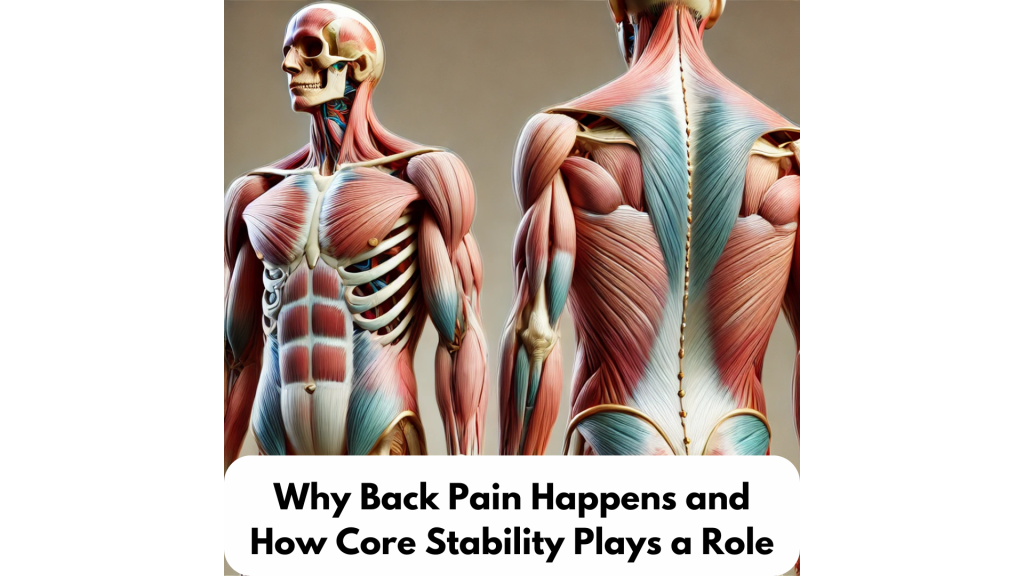
Our core plays a crucial role in maintaining an upright posture. However, when the core doesn’t function properly—often due to prolonged sitting, a sedentary lifestyle, or poor movement patterns—our body stops working as a unified system. This division leads to muscle imbalances, making it difficult to move efficiently and pain-free.
In a state of imbalance, performing daily activities or adding physical load can gradually lead to pain and discomfort. Many individuals who experience low back pain are often dealing with underlying core instability. When the core is weak, the glutes fail to activate properly, while the hip flexors and hamstrings become overworked to compensate.
The Role of Load in Movement
Load isn’t a bad thing—it’s actually essential for building strength, resilience, and overall function. However, when the body is loaded improperly due to poor movement patterns or existing imbalances, it can lead to strain, compensations, and eventually pain. The further the body strays from a neutral, upright position, the more force and torque are placed on muscles and joints, making it harder to function efficiently and increasing the risk of injury.
By improving core stability and ensuring proper movement mechanics, load can be used effectively to enhance strength and prevent issues rather than contribute to them.
Dr. Hilary Strube
Ready to Take Control of Your Back Pain?
If you’re experiencing back pain and want to understand how core stability plays a role in your recovery, we’re here to help. Schedule a free discovery call with us today to discuss your concerns and learn how our personalized approach can get you back to moving pain-free.